How does the 'key money' (Dmei Mafteach) system for rentals in Jaffa potentially affect long-term tenants or investors?
In the bustling, historically rich streets of Jaffa, the rental market operates on a set of unwritten rules that can often baffle newcomers. One of the most significant, yet misunderstood, mechanisms is 'Dmei Mafteach,' commonly referred to in English as 'key money.' This practice involves a substantial upfront payment to secure a lease, often involving the transfer of rights from a departing tenant to a new one. For those looking to establish a long-term presence in neighborhoods like Florentin or Neve Tzedek, understanding this system is not just helpful, it is essential for financial survival and legal security.
- What exactly is 'Dmei Mafteach' in the context of Jaffa real estate?
- The mechanics of the key money transaction: How does it work in practice?
- Why is Jaffa a unique landscape for key money arrangements?
- Implications for long-term tenants: The financial barrier to entry.
- Risks for tenants: Legal ambiguity and the importance of the binding memorandum.
- The investor's perspective: Using key money to stabilize cash flow.
- Legal and tax considerations: Does the Israeli tax authority care?
- Navigating the transition: From tenant to owner in Jaffa.
- Practical steps for negotiating a Dmei Mafteach agreement.
- Comparing key money to traditional long-term leases.
- The future of Jaffa's rental market: Gentrification and market shifts.
- Summary: Balancing opportunity and risk in Jaffa's unique market.
What exactly is 'Dmei Mafteach' in the context of Jaffa real estate?
To understand Dmei Mafteach, one must look beyond the standard rental agreement found in most Western markets. In the Israeli context, particularly in high-demand urban hubs like Jaffa, key money is a sum paid to a current tenant to allow a newcomer to take over their existing lease. This is not a security deposit held by a landlord to cover damages, but rather a transfer of the 'value' of a leasehold position. This often happens when a tenant has secured a rent price that is significantly lower than the current market rate due to the age of their contract.
The logic behind this system is rooted in the scarcity of affordable housing in central areas. When a tenant with a highly favorable lease decides to move, they essentially hold a valuable asset: the right to live in a specific location at a below-market price. By requesting key money, the outgoing tenant is seeking compensation for the loss of that advantage. For the incoming tenant, the payment is seen as a way to 'buy into' a stable, long-term living situation that would otherwise be impossible to find in the current economic climate.
It is important to recognize that Dmei Mafteach is a nuanced transaction that exists in a gray area between formal property law and local custom. While it is widely practiced in neighborhoods undergoing rapid gentrification, it requires a clear understanding of what is actually being purchased. You are not purchasing the property itself, which is recorded in the Tabu (Land Registry), but rather the contractual right to occupy that space under specific terms. This distinction is the foundation of all subsequent negotiations and legal protections.
- Key money is a transfer of leasehold rights, not a property purchase.
- It serves as compensation for departing tenants with below-market leases.
- It acts as an entry barrier that can eventually lead to long-term stability.
The mechanics of the key money transaction: How does it work in practice?
The process of a Dmei Mafteach transaction typically begins with an informal agreement between the outgoing tenant and a prospective new tenant. Unlike a standard rental where you deal directly with the landlord, here, the negotiation is often bilateral. The outgoing tenant presents the opportunity, and the incoming tenant evaluates whether the upfront cost justifies the long-term savings on monthly rent. Once a price is agreed upon, the parties must then approach the landlord to formalize the transition.
Formalization is the most critical step in the process to ensure the transaction is not merely a private arrangement that the landlord can ignore. The landlord must consent to the assignment of the lease to the new party. This usually involves signing a new agreement or an addendum to the existing contract. Without this explicit consent, the new tenant has no legal standing to occupy the premises, and the money paid could be lost in a legal dispute.
The actual transfer of funds can happen in several ways, but it should always be documented. While some may attempt to handle this through cash or informal transfers, professional advice always dictates a written acknowledgment of the payment. This document should clearly state that the sum is being paid specifically as Dmei Mafteach for the transfer of lease rights. This creates a paper trail that can be vital if the landlord later disputes the validity of the lease or the terms of the occupancy.
- Negotiation typically occurs between the outgoing and incoming tenants first.
- Landlord consent is mandatory for the transfer of lease rights to be legally binding.
- Written documentation of the payment is essential to prevent fraud or disputes.
Why is Jaffa a unique landscape for key money arrangements?
Jaffa is not a monolith; its various sub-neighborhoods dictate how key money is perceived and utilized. In the gritty, artistic enclave of Florentin, Dmei Mafteach is often seen as a way for the creative community to maintain a foothold in a rapidly changing area. Here, the payments might be smaller, often reflecting a community-driven exchange of space. However, as Florentin becomes more mainstream, these sums are rising, reflecting the neighborhood's transition from an bohemian hub to a prime residential zone.
In contrast, the luxury-leaning areas like Neve Tzedek operate on a much different scale. In these prestigious streets, key money might be tied to high-end apartments with historical significance. The stakes are much higher, and the tenants are often looking for long-term stability in an area where even a single month of vacancy can represent a significant loss for an owner. In Neve Tzedek, the 'key' being handed over is often a gateway to an elite lifestyle and a highly protected asset class.
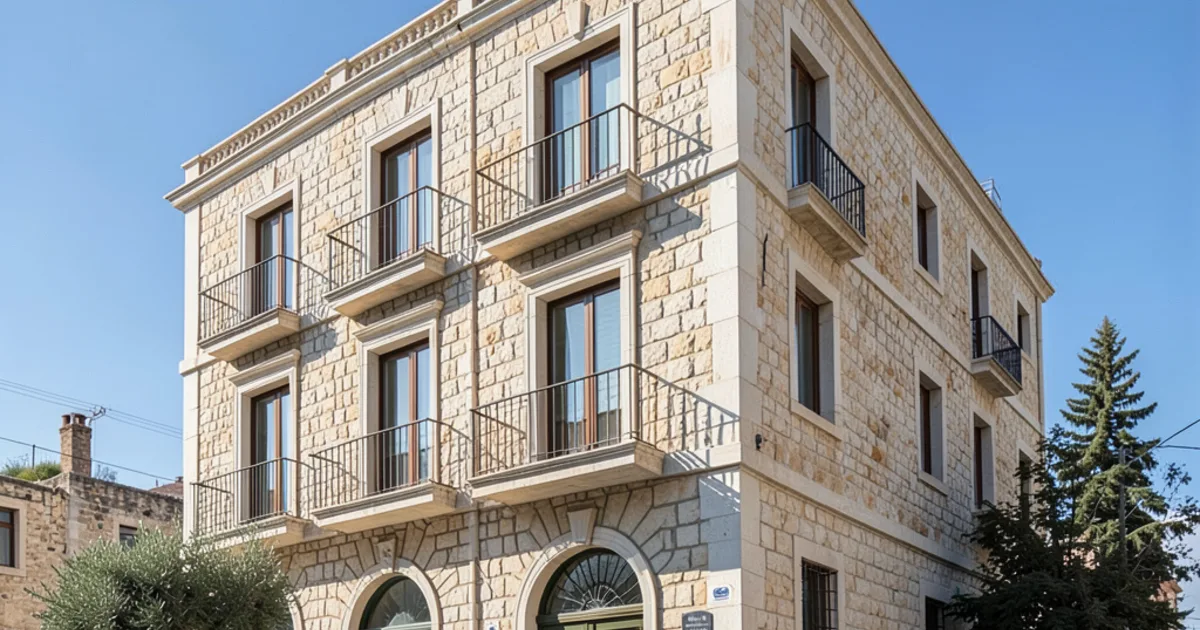
The historic center of Jaffa, with its winding alleys and ancient stone buildings, adds another layer of complexity. Many properties in the old city are subject to unique zoning laws or historical preservation orders. This can make the underlying lease terms even more valuable, as new developments are often restricted. A tenant who has secured a lease in an old stone house has something that cannot be easily replicated by modern construction, driving the demand for key money transactions.
- Florentin: Often driven by community shifts and artistic demand.
- Neve Tzedek: High-stakes transactions involving luxury and prestige.
- Old Jaffa: Value driven by historical scarcity and zoning restrictions.
Implications for long-term tenants: The financial barrier to entry.
For a long-term tenant, Dmei Mafteach represents a paradoxical financial reality. On one hand, it is a massive upfront cost that can be a significant hurdle for those without substantial savings. This barrier to entry can prevent many from accessing the most stable and affordable housing in Jaffa. The requirement to pay a large sum before even the first month's rent is due can make the rental market feel exclusionary to certain demographics.
On the other hand, if viewed as a long-term investment, the key money can actually provide a sense of security. If the tenant secures a lease at a rate that is significantly lower than the projected market inflation, the 'payback period', the time it takes for the monthly savings to cover the initial key money payment, can be relatively short. Once that period is passed, the tenant is effectively living in a subsidized environment compared to the rest of the city, which provides a hedge against rising urban costs.
However, the risk of 'sunk cost' is real. If a tenant pays key money and is forced to move out due to unforeseen circumstances, such as a sudden change in the landlord's needs or a building issue, recovering that money can be extremely difficult. Unlike a security deposit, which is held by the landlord, key money is often paid to a third party. This means the tenant has no direct claim against the landlord for the return of those funds unless specifically negotiated in the lease.
- High upfront costs create a significant barrier to entry for many.
- Potential for long-term savings if the rent is significantly below market rates.
- High risk of non-recoverability if the lease is terminated prematurely.
Risks for tenants: Legal ambiguity and the importance of the binding memorandum.
One of the primary dangers in the Dmei Mafteach system is the lack of formal registration. While the property itself is registered in the Tabu, the leasehold rights and the key money transaction itself are often not. This creates a situation where a tenant might pay a large sum to an individual, only to find that the landlord has no intention of honoring the lease. Without a robust legal framework, the tenant is left in a precarious position with very little recourse in a local court.
To mitigate this risk, it is absolutely essential to have a binding memorandum or a formal lease assignment agreement. This document should not only be signed by the outgoing tenant and the incoming tenant but must also be formally acknowledged or signed by the landlord. This memorandum should clearly define the terms of the new lease, the amount of key money paid, and the circumstances under which the lease can be terminated. It serves as the primary evidence of the tenant's rights.
Furthermore, tenants must perform due diligence on the landlord's authority. It is common in Jaffa to encounter situations where the person claiming to be the landlord is actually a sub-tenant or an unauthorized manager. Before any money changes hands, one must verify the ownership through the Tabu. If the person you are paying is not the legal owner or an authorized representative, your key money payment may be legally void, and you could find yourself facing eviction without any way to reclaim your funds.
- The absence of Tabu registration for lease rights increases vulnerability.
- A binding memorandum is the only way to secure the rights purchased.
- Verification of ownership via the Tabu is a non-negotiable step.
The investor's perspective: Using key money to stabilize cash flow.
From the perspective of a property investor, the Dmei Mafteach system can be a strategic tool for managing cash flow and reducing vacancy risks. When an investor is looking to lease a property in a high-demand area like Jaffa, they can benefit from the stability that a key-money tenant brings. These tenants are often more committed to the property because they have a significant financial stake in staying. This can lead to lower turnover rates and more predictable rental income over many years.
Investors can also use the concept of key money to bridge the gap between current market rents and what a tenant is willing to pay monthly. For example, if an investor wants to maintain a certain monthly cash flow but the market is fluctuating, they might agree to a lower monthly rent in exchange for a larger upfront sum. This upfront capital can be used to offset other costs, such as property maintenance or even to assist with the servicing of a Mashkanta (mortgage), effectively de-risking the investment.
However, investors must be wary of the legal complexities that come with these arrangements. If the key money is not handled correctly, it could be viewed by tax authorities as taxable income or a different type of financial transaction. Furthermore, an investor must ensure that the lease agreements are airtight. If a tenant has paid key money, they will likely be much more litigious if the landlord attempts to raise the rent or change the terms of the lease, making the management of such properties more intensive.
- Key money tenants tend to have much lower turnover rates.
- Upfront payments can assist with mortgage servicing and cash flow management.
- Increased legal scrutiny and management intensity are expected with these tenants.
Legal and tax considerations: Does the Israeli tax authority care?
In Israel, any significant movement of money can potentially trigger interest from the tax authorities. While Dmei Mafteach is a common practice, it does not exist in a vacuum. There is a distinction between a rental payment and a capital transaction. If a landlord receives a large sum that is essentially 'pre-paid rent,' it may have implications for their income tax filings. Understanding how this sum is categorized is vital for both the tenant and the landlord to avoid future audits.
Furthermore, if the property is eventually sold, the history of the lease and any key money arrangements could potentially impact the Mas Shevah (capital gains tax) calculation, especially if the lease terms were used to artificially manipulate the property's perceived value or income. While the key money itself is a transfer between tenants, the overall financial structure of the rental agreement can be scrutinized during a sale. It is always prudent to consult with an Israeli tax professional when entering into high-value lease assignments.
Another factor to consider is the Mas Rekhisha (purchase tax). While Mas Rekhisha typically applies to the sale of real estate, if a transaction is structured in a way that looks more like a transfer of ownership rights rather than a lease, the tax authorities might take interest. While this is rare for standard residential rentals, the complexity of Jaffa's property market, where many buildings are part of complex ownership structures, means that one should never assume a transaction is 'invisible' to the state.
- Pre-paid rent may be treated as taxable income for the landlord.
- Lease structures can influence Mas Shevah calculations during property sales.
- Consulting a tax professional is essential for high-value transactions.
Navigating the transition: From tenant to owner in Jaffa.
For many residents in Jaffa, renting is not a permanent state but a stepping stone toward ownership. In this context, the Dmei Mafteach system can act as a unique bridge. A tenant who has paid key money to secure a long-term, low-cost lease is in a prime position to monitor the property and the neighborhood. They are essentially 'investing' in a specific location, which can build the local knowledge and financial discipline required for a future property purchase.
As the tenant builds equity in their lifestyle through rent savings, they may eventually look to apply for a Mashkanta (mortgage) to purchase a property in the same area. The stability provided by a long-term lease allows them to plan their finances with greater certainty. However, it is important to remember that the key money paid to a previous tenant does not count toward a down payment for a property purchase. It is a separate expense that must be factored into the overall path toward homeownership.
When the transition from tenant to owner occurs, the history of the lease becomes relevant. If the tenant decides to buy the property they are currently renting, the landlord may attempt to use the existing lease terms as a baseline for negotiations. A tenant who has successfully navigated the key money system and maintained a good relationship with the landlord is often in a stronger position to negotiate a purchase, as they have already proven their reliability and their deep understanding of the property's value.
- Key money provides a stable environment for long-term financial planning.
- The transition to ownership requires separate capital for a Mashkanta down payment.
- Successful lease management can build a foundation for future purchase negotiations.
Practical steps for negotiating a Dmei Mafteach agreement.
Negotiating a key money deal requires a disciplined approach to due diligence. The first step is always to verify the current lease terms. You must see the original contract to ensure that the rent being 'transferred' is actually what the outgoing tenant claims it is. Do not take verbal promises at face value. A discrepancy between the promised rent and the actual contract is a common way for tenants to lose money in these transactions.
The second step is to verify the landlord's status. As mentioned previously, checking the Tabu is essential. You should also confirm that the landlord is aware of and consents to the transfer. A common mistake is to pay the outgoing tenant and then find out the landlord has already issued a notice to vacate or has decided to sell the property. Once the property is sold, the new owner may not be bound by the previous lease terms unless specifically documented.
The third step involves checking the municipal obligations. In Jaffa, Arnona (municipal tax) can vary significantly depending on the property's usage and size. You should ensure that all Arnona payments are up to date and that there are no outstanding municipal liens on the property. A tenant who inherits a lease also inherits the responsibility for these costs, and an unexpected debt can quickly negate the benefits of a low monthly rent.
- Always review the original lease contract before making any payments.
- Verify landlord ownership and consent through the Tabu and written documents.
- Confirm all Arnona and municipal taxes are current to avoid inherited debt.
Comparing key money to traditional long-term leases.
When deciding between a traditional lease and a Dmei Mafteach arrangement, one must weigh the immediate cost against the long-term value. A traditional lease requires much less upfront capital, making it more accessible and less risky for those who may need to move frequently. It offers a clean break: you pay your deposit, you pay your rent, and when you leave, you get your deposit back. There is very little ambiguity in a standard rental agreement.
In contrast, the key money model is an 'all-in' strategy. It is designed for those who are certain about their location and their timeline. The primary advantage is the potential for a significantly lower cost of living over several years, which can be a massive benefit in an inflationary market. However, the lack of liquidity, the fact that you cannot easily get your key money back, is a major disadvantage that must be weighed against the monthly savings.
Ultimately, the choice depends on your financial profile and your intended duration of stay. If you are an expat or a student who may only be in Jaffa for a year or two, a traditional lease is almost always the better option. If you are a professional or an investor looking to establish a long-term base in a neighborhood like Neve Tzedek, the Dmei Mafteach system might be the only way to secure a high-quality home at a sustainable price point.
- Traditional Lease: Lower upfront cost, higher liquidity, lower risk.
- Key Money: Higher upfront cost, lower monthly rent, higher long-term value.
- Decision Factor: Based on intended duration of stay and financial stability.
The future of Jaffa's rental market: Gentrification and market shifts.
As Jaffa continues to undergo intense gentrification, the informal systems like Dmei Mafteach are facing new pressures. As more large-scale developers enter the area, the 'old way' of doing things, characterized by handshake deals and lease transfers, is being replaced by more standardized, corporate rental models. This shift tends to favor institutional landlords who prefer the simplicity of standard leases over the complexities of key money arrangements.
However, as long as there is a significant gap between the cost of new developments and the income levels of the local population, the demand for 'old' leases will persist. This means that Dmei Mafteach will likely remain a feature of the Jaffa market, but it will become increasingly professionalized. We are seeing more lawyers and real estate agents involved in these transactions to ensure that the legal protections are as robust as possible.
Furthermore, urban renewal projects (Pinui Binui) in Jaffa will continue to reshape the landscape. When old buildings are demolished to make way for new towers, the leases associated with them are often terminated. This creates a cycle of displacement that can disrupt the key money market. For investors and tenants alike, staying informed about local urban planning and development projects is vital to predicting how these market shifts will impact lease stability.
- Corporate rental models are challenging traditional informal systems.
- Demand for 'old' leases persists due to the gap in housing affordability.
- Urban renewal projects can disrupt existing leasehold structures.
Summary: Balancing opportunity and risk in Jaffa's unique market.
Navigating the Jaffa rental market, particularly through the Dmei Mafteach system, requires a blend of local intuition and rigorous legal caution. There is no denying that key money offers a unique opportunity to secure a foothold in one of the world's most vibrant and sought-after neighborhoods. For the right tenant, it can be a brilliant financial move that provides stability in an uncertain economy.
Yet, the risks are substantial and cannot be ignored. The potential for financial loss due to legal ambiguity, lack of landlord consent, or unrecorded transactions is a reality that every participant must face. The key to success lies in moving away from the 'informal' mindset and toward a structured, documented, and verified approach. Never rely on a verbal agreement when significant sums of money are involved.
Whether you are a long-term tenant looking for a home or an investor looking to stabilize your portfolio, the golden rule in Jaffa is due diligence. Check the Tabu, verify the Arnona, insist on a binding memorandum, and always consult with professionals. By respecting the complexity of the system rather than trying to bypass it, you can turn the unique quirks of the Jaffa market into a significant advantage.
FAQ
Is key money (Dmei Mafteach) a legal practice in Israel?
While it is a widely recognized custom in the rental market, it is not a formal part of property law. Its legality depends heavily on how it is documented and whether the landlord has formally consented to the transfer of lease rights in a written agreement.
Can I get my key money back if I move out early?
Generally, no. Unlike a security deposit held by a landlord, key money is typically paid to a previous tenant. Unless your specific lease agreement contains a clause for the reimbursement of key money, it is considered a non-refundable cost of securing the lease.
How do I ensure the landlord actually owns the property?
You should always request a copy of the property's details from the Tabu (the Israeli Land Registry). This allows you to verify the legal owner's identity and ensures that the person you are negotiating with has the authority to transfer the lease.
Does paying key money affect my ability to get a mortgage later?
The payment of key money itself does not affect your creditworthiness or mortgage eligibility. However, since it is a significant upfront expense, it will impact your available liquid savings, which you may need for a down payment on a Mashkanta.
Get your personalised shortlist
Listings and up-to-date info, straight to your inbox, free, no obligation.
See Tel Aviv homes →