Due diligence checklist for buying an apartment in a historic Jaffa building
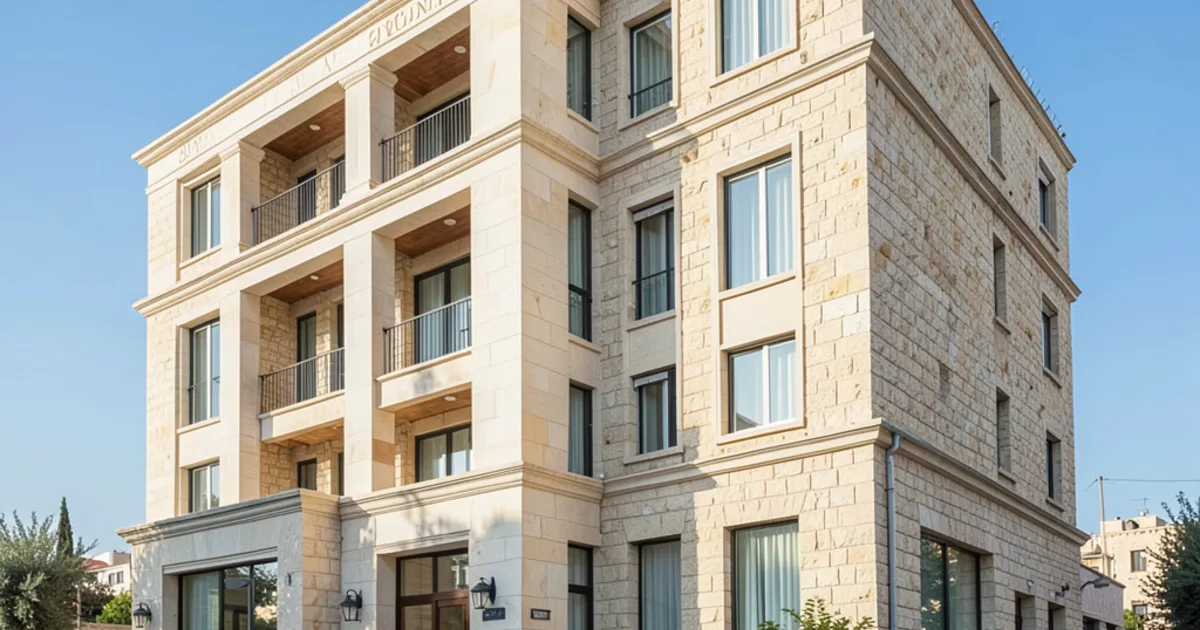
The allure of Jaffa’s historic stone buildings, with their arched windows and storied pasts, makes them highly coveted real estate in the Tel Aviv metropolitan area. However, purchasing a property in a heritage zone is fundamentally different from buying a modern apartment in a high-rise. You are not just buying square footage; you are entering into a complex relationship with conservation laws, archaeological sensitivities, and ancient structural realities. This guide provides a comprehensive due diligence checklist to help you navigate the unique challenges of Jaffa's historic market.
- Decoding Heritage Status and Conservation Regulations
- Verifying Title and Ownership through the Tabu
- Navigating Archaeological Risks and Structural Integrity
- Analyzing the Binding Memorandum and Legal Framework
- Calculating the Total Financial Commitment: Taxes and Fees
- Securing Financing for Historic Real Estate (Mashkanta)
- Municipal Compliance and Planning Permissions
- Managing Shared Rights and Common Areas in Old Buildings
- The Long-Term Cost of Maintaining a Historic Asset
- Integrating Professional Technical Inspections
Decoding Heritage Status and Conservation Regulations
When browsing the winding alleys of Old Jaffa or the nearby Florentin area, the allure of stone walls and arched windows is undeniable. However, many of these structures fall under specific conservation laws that dictate what you can and cannot do with your property. Before signing any agreement, it is vital to determine if the building is classified as a 'protected monument' or part of a 'conservation zone' by the Tel Aviv-Yafo Municipality. This classification can significantly impact your ability to renovate, expand, or even change the exterior appearance of the home.
Navigating these regulations requires more than just a cursory glance at the building's facade. You must understand the specific 'Conservation Plan' (Tochnit Shmira) that applies to the neighborhood. These plans often mandate the use of specific materials, such as traditional lime mortars or certain types of stone, to maintain the historical integrity of the area. Failing to adhere to these guidelines during a renovation can lead to heavy fines or even legal orders to undo the work at your own expense.
Furthermore, the level of protection can vary wildly between buildings. Some structures are strictly preserved, meaning the interior layout might also be protected, while others only require the exterior shell to remain untouched. A thorough due diligence process involves checking these designations with the municipal planning department. This step ensures that your vision for the apartment aligns with the legal reality of the property's heritage status and prevents costly surprises during the renovation phase.
- Verify the building's classification in the municipal conservation database.
- Review the specific 'Tochnit Shmira' (Conservation Plan) for the neighborhood.
- Identify permitted materials for exterior and interior restoration.
- Confirm if the interior layout is protected or if only the facade is restricted.
Verifying Title and Ownership through the Tabu
In Israel, the definitive source for property ownership is the Tabu, or the Land Registry. For historic buildings in Jaffa, the ownership structure can often be more convoluted than in modern developments. You may find that a single apartment is part of a larger, undivided plot, or that the rights to certain common areas are not clearly delineated. It is imperative to obtain an updated extract from the Tabu to ensure the seller has the legal right to transfer the property to you.
Beyond simply confirming the owner's name, your due diligence must look for any 'Ishrur' (approvals) or liens attached to the property. Historic buildings are sometimes subject to old debts, unresolved inheritance issues, or municipal claims that may not be immediately visible during a physical walkthrough. A professional legal review of the Tabu will reveal if there are any mortgages (Mashkanta) or legal encumbrances that must be cleared before the transaction can proceed. This step is non-negotiable for protecting your investment.
In some older Jaffa neighborhoods, you might encounter properties registered in the 'Azra' or other older registration systems rather than the modern Tabu. While these are still legally binding, they require a higher level of scrutiny from your lawyer to ensure the chain of title is unbroken. Discrepancies between the physical reality of the apartment and the legal description in the registry can lead to significant disputes. Always insist on a clear, documented path from the original owner to the current seller.
- Request an official, recent extract from the Tabu Land Registry.
- Check for any existing mortgages, liens, or legal encumbrances.
- Verify the exact boundaries and description of the property rights.
- Ensure the seller has full legal authority to execute the sale.
Navigating Archaeological Risks and Structural Integrity
Jaffa is one of the oldest continuously inhabited cities in the world, which introduces a unique variable to the due diligence process: archaeology. Any significant renovation, particularly those involving digging or foundation work, may trigger an intervention by the Israel Antiquities Authority (IAA). If archaeological remains are discovered during your construction, work can be halted indefinitely, and you may be required to fund the excavation and preservation of the finds. This can add substantial time and expense to your project.
From a structural standpoint, historic buildings in Jaffa face specific environmental challenges. The proximity to the Mediterranean Sea means that salt air and high humidity can cause significant degradation to limestone and traditional masonry. You must investigate whether the building has suffered from 'rising damp' or if the stone has become porous over time. These issues are common in older coastal structures and can lead to much higher maintenance costs than a modern, sealed building would require.
It is also essential to examine the stability of the building's core. Many historic Jaffa homes were built using traditional methods that rely on gravity and heavy stone rather than modern steel reinforcements. Over decades, settling or seismic activity can cause cracks in the load-bearing walls. A thorough structural assessment should be conducted by an engineer who is experienced with heritage masonry, rather than a general inspector who might overlook the nuances of ancient construction techniques.
- Consult with the Israel Antiquities Authority regarding potential excavation risks.
- Inspect stone facades for salt erosion and humidity-related damage.
- Check for signs of structural settling or cracks in load-bearing walls.
- Assess the integrity of traditional roofing and drainage systems.
Analyzing the Binding Memorandum and Legal Framework
The transaction for a historic Jaffa apartment is formalized through a document known as the 'Binding Memorandum' (Hovah). This is not merely a formality; it is the primary legal instrument that governs your rights and obligations. Because historic properties often come with unique caveats, such as specific conservation requirements or shared usage rights, the memorandum must be drafted with extreme precision. A generic contract will not suffice for a property with such a complex history.
Your lawyer's role during the review of the memorandum is to ensure that all due diligence findings are integrated into the contract. For example, if your technical inspection revealed a need for roof repairs, you should negotiate for the seller to address these issues or for a price reduction before the signing. The memorandum should also clearly outline the timeline for the transfer of ownership and the specific conditions that must be met for the deal to close, such as the clearing of existing liens.
Furthermore, the memorandum should address how the property handles shared resources. In many old Jaffa buildings, rights to the courtyard, the staircase, or even water connections may be loosely defined. A well-drafted contract will explicitly state your rights to these common areas to prevent future litigation with neighbors or the building's management. Never rely on verbal promises made by a seller; if a right is not in the written memorandum, it effectively does not exist.
- Ensure all technical and legal findings are reflected in the contract.
- Confirm clear terms for the transfer of ownership and closing dates.
- Explicitly define rights to common areas and shared facilities.
- Include clauses for the resolution of any discovered encumbrances.
Calculating the Total Financial Commitment: Taxes and Fees
The purchase price of a Jaffa apartment is only one component of your total investment. In Israel, the tax structure can be significant and varies based on your residency and the nature of the property. The most prominent tax is the Mas Rekhisha, or purchase tax. This tax is calculated based on the purchase price and follows a progressive scale. It is vital to understand whether you qualify for any exemptions or if you will be taxed at the higher rate applicable to non-residents.
In addition to the purchase tax, you must account for the Mas Shevah, which is the capital gains tax paid by the seller. While this is typically the seller's responsibility, it is a key part of the negotiation process. In some cases, the net amount the seller receives can influence the final sale price. Your legal counsel should provide a clear breakdown of all expected taxes to ensure your budget accounts for the total 'on-the-road' cost of the acquisition.
Ongoing municipal costs, specifically the Arnona, also require careful planning. Arnona is the local property tax used by the Tel Aviv-Yafo Municipality to fund city services. In historic Jaffa, the rate can fluctuate depending on whether the property is registered as residential, commercial, or a mixed-use space. Because many historic buildings are located in areas with high tourism and commercial activity, it is crucial to verify that your property is correctly categorized to avoid unexpected increases in your monthly tax bills.
- Calculate Mas Rekhisha (Purchase Tax) based on residency status.
- Factor in legal, notary, and registration fees.
- Verify the property's Arnona (Municipal Tax) classification.
- Understand the impact of Mas Shevah on the overall negotiation.
Securing Financing for Historic Real Estate (Mashkanta)
Securing a mortgage, known as Mashkanta, for a historic property in Jaffa can be more challenging than for a new apartment. Banks and lending institutions are often more conservative when evaluating the collateral value of older buildings. They may view the risks associated with heritage conservation and structural aging as potential threats to the property's future liquidity. Consequently, the approval process might take longer, and the terms offered could differ from those for modern constructions.
A critical part of the mortgage process is the appointment of a 'Shama'i', or professional appraiser. The bank will rely heavily on this appraiser's report to determine the loan-to-value ratio. If the appraiser identifies significant structural issues or notes that the property's value is limited by strict conservation laws, the bank may offer a lower valuation than you expected. This could result in a higher down payment requirement to bridge the gap between the loan amount and the purchase price.
To increase your chances of successful financing, it is helpful to present the bank with a clear plan. If you intend to renovate, having a preliminary architectural plan and a budget for restoration can demonstrate to the lender that you are aware of the property's needs. Proactive communication with your mortgage advisor and the bank's underwriting department is essential to navigating the specific complexities of financing Jaffa's historic real estate market.
- Prepare for a more rigorous appraisal process by a Shama'i.
- Anticipate potential differences in loan-to-value ratios for older buildings.
- Provide clear renovation plans to lenders where possible.
- Consult with mortgage specialists experienced in the Israeli market.
Municipal Compliance and Planning Permissions
Any changes you wish to make to a historic Jaffa property must be approved by the Tel Aviv-Yafo Municipality. This process involves obtaining a 'Heter Bniya', or building permit, which can be a lengthy and bureaucratic endeavor. Because the building is likely in a sensitive zone, the municipality will scrutinize your plans to ensure they do not violate local zoning laws or the heritage protection guidelines mentioned earlier. It is not enough to simply have a good architect; you must have an architect who understands the local planning committee's expectations.
The planning and building committee (Va'ad HaPlanat VeHaBniya) plays a central role in this process. They will evaluate your proposed changes against the neighborhood's master plan. In Jaffa, this often means that even minor changes, such as adding a balcony or changing window frames, can be subject to intense scrutiny. It is highly recommended to perform a 'pre-submission' check with the municipality to gauge the likelihood of approval before you finalize your purchase or begin expensive design work.
Furthermore, you must ensure that the property you are buying is currently in compliance with municipal regulations. If the previous owner added an illegal extension or modified the building without a permit, you may inherit the responsibility for rectifying these violations. This can involve paying significant fines or even being forced to demolish the unauthorized structures. Part of your due diligence should include a check of the municipality's records to ensure the building's current state matches its legal permits.
- Verify the existence of valid building permits for all current structures.
- Consult the municipality regarding the difficulty of obtaining new permits.
- Check for any outstanding municipal violations or fines.
- Work with architects experienced in Jaffa's planning committee processes.
Managing Shared Rights and Common Areas in Old Buildings
In many of Jaffa's historic buildings, the concept of 'private property' is somewhat blurred by the presence of shared spaces. Courtyards, staircases, rooftops, and even certain garden areas are often managed collectively by the residents. This collective management is usually organized through a 'Va'ad Bayit', or house committee. Before purchasing, you must understand exactly which parts of the building are yours alone and which are shared, as this will dictate your daily use and your financial responsibilities.
Disputes over shared areas are common in older neighborhoods. You might find that a neighbor claims exclusive use of a courtyard that is legally common ground, or that the maintenance of the staircase is being neglected. It is vital to review the building's bylaws and any existing agreements between residents. If the building does not have a formal Va'ad Bayit, you should investigate how decisions regarding repairs and maintenance are currently made to avoid future conflict.
The financial obligations of the Va'ad Bayit are another critical factor. You will be required to contribute to the monthly maintenance budget, which covers cleaning, lighting, and structural repairs to common areas. In historic buildings, these costs can be higher than in modern apartments due to the specialized nature of the upkeep required for old stone and shared historical features. Always ask for the building's recent financial records to ensure there are no significant unpaid debts or upcoming major expenses.
- Review the building's bylaws and shared area agreements.
- Identify the specific rights and responsibilities of the Va'ad Bayit.
- Confirm the current financial health of the building's maintenance fund.
- Clarify ownership and usage rights for courtyards and rooftops.
The Long-Term Cost of Maintaining a Historic Asset
Owning a historic home in Jaffa is a privilege that comes with a unique set of long-term financial commitments. Unlike modern buildings that use standardized, mass-produced materials, historic structures often require specialized, high-quality components for their upkeep. Whether it is sourcing specific types of stone for a facade repair or hiring craftsmen skilled in traditional lime-based mortars, the cost of maintenance is typically higher than average. You should view these properties as long-term assets that require a dedicated maintenance budget.
Environmental factors play a significant role in the ongoing costs. As mentioned previously, the coastal location of Jaffa means that salt and moisture are constant challenges. Regular inspections and preventative maintenance, such as resealing stone or checking drainage systems, are essential to prevent minor issues from turning into catastrophic structural failures. A proactive approach to maintenance can protect the value of your investment and prevent the need for extremely expensive emergency repairs in the future.
Finally, consider the impact of evolving conservation laws on your long-term ownership. As the municipality's understanding of heritage preservation grows, new regulations may be introduced that affect how you maintain or modify your property. Staying informed about local planning trends and maintaining a good relationship with the municipal conservation department can help you navigate these changes. Ultimately, the goal is to balance the preservation of the building's historical soul with the practicalities of modern living.
- Budget for specialized materials and skilled labor for repairs.
- Plan for regular preventative maintenance against coastal erosion.
- Account for potential changes in local conservation regulations.
- Factor in higher-than-average monthly maintenance costs.
Integrating Professional Technical Inspections
While legal and financial due diligence is essential, it is incomplete without a thorough technical inspection. For a historic Jaffa building, a standard home inspection is often insufficient. You should engage a professional engineer or a specialized architect who has significant experience with heritage structures and traditional masonry. Their role is to look beyond the surface and assess the actual health of the building's bones, including the foundations, load-bearing walls, and roof.
A professional inspector will use specialized knowledge to identify issues that an untrained eye might miss, such as the presence of hidden moisture within thick stone walls or the stability of ancient arches. They can also provide an estimate of the potential costs for necessary repairs, which can be a powerful tool during your price negotiations. Having a technical report in hand allows you to approach the seller with concrete evidence, rather than mere suspicion, regarding the property's condition.
The technical inspection should be integrated into the overall timeline of your due diligence. Ideally, this inspection should occur after you have reviewed the Tabu and the initial legal documents, but before you sign the binding memorandum. This ensures that you are making an informed decision based on both the legal status and the physical reality of the property. In the complex market of Jaffa, this multi-layered approach is the best way to ensure a secure and successful real estate investment.
- Hire an engineer or architect specialized in heritage buildings.
- Request a detailed report on structural integrity and masonry health.
- Use technical findings to inform price negotiations.
- Ensure the inspection is completed before signing the binding memorandum.
FAQ
Can I renovate a historic apartment in Jaffa?
Yes, but renovations are strictly governed by conservation laws and municipal permits. You must adhere to specific guidelines regarding materials and exterior appearances to preserve the building's heritage status.
What is the importance of the Tabu in Jaffa?
The Tabu is the official Land Registry that confirms legal ownership and any existing liens or mortgages. Because Jaffa's ownership can be complex, verifying the title through the Tabu is a critical step in protecting your investment.
How do banks view historic properties for mortgages?
Banks often view historic properties as higher risk due to potential structural issues or conservation restrictions. This can lead to more rigorous appraisals and potentially different loan-to-value ratios compared to modern buildings.
Are there hidden costs when buying in Jaffa?
Beyond the purchase price, you must account for Mas Rekhisha (purchase tax), municipal Arnona, and potential renovation costs. Additionally, historic buildings may require more expensive specialized maintenance due to their age and coastal location.
Get your personalised shortlist
Listings and up-to-date info, straight to your inbox, free, no obligation.
See Tel Aviv homes →