Is it better to buy or rent in Tel Aviv for a 2-year stay
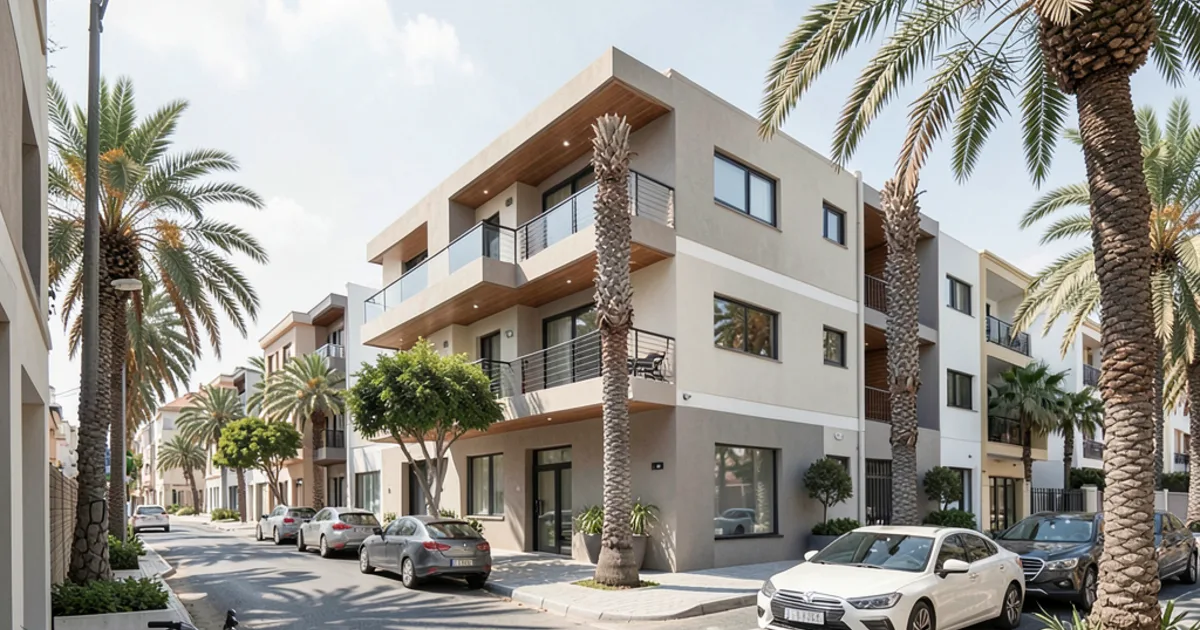
Relocating to Tel Aviv is an exhilarating move, but once you arrive, the question of housing becomes a central pillar of your financial planning. For many expatriates and temporary residents, the decision between renting and buying is not merely about comfort, but about navigating one of the most complex real estate markets in the Middle East. When your intended stay is limited to approximately twenty-four months, the traditional logic of homeownership undergoes a significant shift. This guide provides a deep dive into the financial, legal, and lifestyle implications of both paths to help you make an informed decision.
- The Two-Year Dilemma: Why Timing Changes Everything
- The Renting Path: Flexibility and Low Entry Barriers
- The Buying Path: Capital Commitment and Ownership
- Understanding the Tax Burden: Mas Rekhisha and Mas Shevah
- Navigating the Mashkanta: The Mortgage Landscape
- Neighborhood Analysis: Choosing Your Base
- The Hidden Costs of Ownership: Maintenance and Arnona
- The Exit Strategy: The Difficulty of Quick Resales
- Legal Safeguards: From the Binding Memorandum to the Notary
- The Verdict: A Decision Matrix for Expats
The Two-Year Dilemma: Why Timing Changes Everything
In the world of real estate, time is the most critical variable in determining your return on investment. For a resident planning to stay for a decade, the volatility of the market is often smoothed out by long-term appreciation. However, for someone on a two-year horizon, you are operating within a much tighter window where market fluctuations can have a disproportionate impact on your net wealth. The costs associated with entering and exiting the market may not be recouped within such a short period.
When you rent, your primary concern is the monthly cash outflow and the flexibility to move when your contract expires. When you buy, you are committing significant capital to an illiquid asset that requires a complex exit strategy. A two-year stay sits in an awkward middle ground; it is too long to justify the constant upheaval of short-term rentals, yet it is often too short to absorb the heavy transaction costs of purchasing a property. You must weigh the peace of mind of a fixed lease against the potential, albeit risky, gains of property ownership.
Furthermore, the psychological aspect of your stay cannot be ignored. A resident who seeks to fully immerse themselves in the local culture might find that owning a home provides a sense of belonging and stability. Conversely, an expat who views their time in Tel Aviv as a transitional phase may find the administrative burden of ownership to be an unnecessary distraction. Understanding your personal motivation is the first step in deciding which financial model fits your lifestyle.
- Consider your primary goal: lifestyle immersion or capital preservation?
- Evaluate the certainty of your two-year timeline.
- Assess your tolerance for the administrative complexities of Israeli bureaucracy.
The Renting Path: Flexibility and Low Entry Barriers
Renting in Tel Aviv is the most common route for those arriving on short-term assignments or temporary visas. The primary advantage is the lack of significant upfront capital requirements compared to a purchase. Instead of a massive down payment, you are looking at security deposits and perhaps a few months of rent in advance. This allows you to keep your capital liquid, perhaps investing it in other ways while you settle into the city.
The rental market in Tel Aviv is highly dynamic, offering a vast spectrum of options from studio apartments in Florentin to luxury penthouses in the City Centre. This diversity allows you to 'test drive' different neighborhoods without a long-term commitment. If you find that the noise of a central district is too much, or that the commute from a more residential area like Ramat Aviv is too long, moving is a relatively straightforward process once your lease concludes.
However, renting is not without its drawbacks. You are subject to the whims of the market, and rent prices can fluctuate significantly upon the renewal of your contract. You also lack control over the property; you cannot renovate, paint, or make structural changes to suit your tastes. Additionally, you must always account for the monthly Arnona (municipal tax), which is a mandatory expense for any resident, regardless of whether they own or rent.
- Immediate mobility allows for rapid changes in lifestyle or location.
- Lower initial capital requirement preserves liquidity for other uses.
- Avoidance of heavy transaction taxes like Mas Rekhisha.
The Buying Path: Capital Commitment and Ownership
Buying a home in Tel Aviv is a major life event that offers the potential for long-term wealth accumulation. For those who might extend their stay beyond the initial two years, ownership provides a hedge against rising rental costs. By owning, you lock in your housing costs (excluding maintenance and taxes), protecting yourself from the inflationary pressures that frequently affect the Tel Aviv rental market.
Ownership also grants you the freedom to customize your living space. Whether it is updating a kitchen in a historic Neve Tzedek building or adding modern amenities to a contemporary apartment, the ability to shape your environment is a significant luxury. For many, the pride of ownership and the ability to call a piece of the city 'home' provides a level of stability that renting simply cannot match.
The downside for a two-year resident is the sheer scale of the commitment. The entry costs are substantial, involving not just the purchase price but a series of taxes and fees. If you are forced to sell after only twenty-four months, you may find that the costs of buying and selling, including the Mas Shevah (capital gains tax) and legal fees, exceed any appreciation the property saw during your stay. This makes the 'buy and sell' strategy particularly risky for short-term residents.
- Potential for capital appreciation over the long term.
- Full control over property modifications and aesthetics.
- Protection against monthly rental price hikes.
Understanding the Tax Burden: Mas Rekhisha and Mas Shevah
In Israel, the government imposes specific taxes on real estate transactions that every buyer must understand. The most immediate is the Mas Rekhisha, or purchase tax. This tax is calculated based on the value of the property and follows a progressive scale. For many buyers, this represents a significant, non-recoverable upfront cost that must be factored into the total acquisition budget. Failing to account for this can lead to unexpected financial strain during the closing period.
The second major tax is the Mas Shevah, which is the capital gains tax applied when you sell a property. This tax is designed to capture a portion of the profit made on the sale. For a two-year resident, this is a critical consideration. If you purchase a property and the market remains stagnant or dips slightly, the combined cost of the Mas Rekhisha at the start and the potential Mas Shevah at the end could result in a net loss, even if the sale price is nominally higher than the purchase price.
Navigating these taxes requires professional guidance. While the rules can be complex, particularly for those who may have tax residencies in other countries, a local tax expert can help you understand your obligations. It is vital to realize that these taxes are not merely 'fees' but are integral parts of the financial equation that determines whether a short-term ownership stint is actually profitable.
- Mas Rekhisha: An immediate, progressive tax paid at the time of purchase.
- Mas Shevah: A tax on the profit realized upon the sale of the property.
- Always consult a professional to calculate the total tax impact on your specific budget.
Navigating the Mashkanta: The Mortgage Landscape
For most buyers in Tel Aviv, securing a Mashkanta, or mortgage, is an essential part of the process. The Israeli mortgage market is well-established but can be quite stringent regarding requirements. Banks typically require a substantial down payment, often a significant percentage of the property's value, which can be a hurdle for those who do not have significant local assets or a long-standing credit history in Israel.
The terms of a Mashkanta can vary widely, involving different interest rate structures such as fixed, variable, or linked rates. Some mortgages are linked to the Consumer Price Index (CPI), which means your monthly payments could increase if inflation rises. For an expat on a fixed-term stay, this introduces an element of unpredictability that must be managed carefully through rigorous financial planning.
Furthermore, the process of obtaining a mortgage can be time-consuming and involves extensive documentation. You will need to provide proof of income, employment contracts, and potentially more, depending on your residency status. For those who are only in the country for two years, the long-term nature of a mortgage might feel at odds with the short-term nature of their stay, making it important to consider whether you would be better served by a cash purchase or a shorter-term financing arrangement.
- Requires a significant down payment, often reducing liquid cash.
- Interest rates may be linked to inflation, affecting monthly stability.
- The application process is document-intensive and requires local financial standing.
Neighborhood Analysis: Choosing Your Base
Tel Aviv is a mosaic of distinct neighborhoods, each offering a different lifestyle and price point. If you are looking for something trendy and slightly more affordable, Florentin might appeal to you. It is known for its street art and vibrant nightlife, making it a popular choice for younger residents. However, the rental market here is highly competitive, and the infrastructure is still evolving, which may affect your daily convenience.
For those seeking a more prestigious and historic atmosphere, Neve Tzedek is unparalleled. This neighborhood offers charm, boutique shops, and high-end living, but it comes with a premium price tag for both renting and buying. The property values here are among the highest in the city, and the lifestyle is more refined, which might suit an expat looking for a luxury experience during their two-year stay.
Other areas like Jaffa offer a unique blend of ancient history and modern gentrification, providing a different aesthetic entirely. If you prefer a more residential, family-oriented feel, areas like Ramat Aviv or parts of North Tel Aviv might be more appropriate. In these neighborhoods, the pace of life is slightly slower, and the property values tend to be more stable, though the entry price remains high compared to the city's outskirts.
- Florentin: Trendy, artistic, and relatively more accessible.
- Neve Tzedek: Historic, luxury-oriented, and high-cost.
- Jaffa: Unique heritage with rapid urban development.
- Ramat Aviv: Residential, stable, and family-friendly.
The Hidden Costs of Ownership: Maintenance and Arnona
When calculating the cost of living, many people focus solely on the rent or the mortgage, but ownership involves several 'hidden' expenses. One of the most consistent is the Arnona, the municipal property tax. This tax is calculated by the municipality based on the size of the property and its location. As an owner, you are responsible for ensuring these payments are up to date, and in many cases, the rates can be higher for commercial or specific residential zones.
Maintenance and repairs are another significant factor. In a rental agreement, many major repairs are the responsibility of the landlord. However, once you own the property, you are the sole person responsible for everything from a leaking pipe to an electrical fault. In older buildings, particularly in areas like Jaffa or Neve Tzedek, maintenance issues can arise more frequently and can be quite costly to resolve.
Additionally, you must account for 'Vaad Bayit,' or building management fees. These fees cover the maintenance of common areas, such as elevators, hallways, and cleaning services. In modern high-rise buildings in the City Centre, these fees can be quite substantial due to the amenities provided, such as gyms or 24-hour security. When comparing renting to buying, these recurring monthly costs should be added to your total budget to ensure an accurate comparison.
- Arnona: Mandatory municipal tax based on property size and location.
- Maintenance: The owner's responsibility for all structural and functional repairs.
- Vaad Bayit: Monthly fees for building upkeep and shared amenities.
The Exit Strategy: The Difficulty of Quick Resales
A successful real estate move is defined not just by how you enter the market, but by how you exit it. For a two-year resident, the exit strategy is perhaps the most critical component of the entire decision. Renting offers an incredibly easy exit; once your lease term is up, you simply move out, provided you have given the required notice. This flexibility is a massive advantage for anyone whose stay in Israel might be subject to change.
Selling a property, on the other hand, is a process that can take months. You must list the property, manage viewings, negotiate with potential buyers, and navigate the legal transfer of title through the Tabu land registry. If you need to leave the country quickly due to a job change or personal reasons, having your capital tied up in a property that hasn't yet sold can create significant logistical and financial stress.
Furthermore, the financial 'break-even' point for a sale is much higher than many realize. To truly profit, the property must appreciate enough to cover the initial purchase tax, the legal fees for both buying and selling, the agent's commission, and the Mas Shevah. For a two-year window, the likelihood of achieving this level of appreciation is statistically lower than for a long-term investor, making the exit strategy a high-risk variable.
- Renting: High liquidity and minimal exit friction.
- Buying: Low liquidity and a lengthy, complex exit process.
- Risk: The danger of being unable to liquidate assets quickly when leaving the country.
Legal Safeguards: From the Binding Memorandum to the Notary
The Israeli real estate process is governed by specific legal steps that ensure the security of the transaction. Once a price is agreed upon, the next critical step is the signing of a binding memorandum. This document outlines the terms of the sale, the timeline for payment, and the conditions of the transfer. It is essential to have a specialized real estate lawyer review this document before signing, as it becomes the legal foundation of your purchase.
Throughout the process, various official entities play a role in validating the transaction. The Tabu (the national land registry) is the ultimate authority on property ownership. Ensuring that the property is correctly registered in the Tabu and that there are no liens or legal encumbrances on the title is a non-negotiable step in the due diligence process. A lawyer will typically handle this verification to protect your interests.
Finally, the role of the notary is crucial in many aspects of the legal process, from certifying signatures to validating documents for international use. For an expat, who may be dealing with documents from multiple jurisdictions, understanding the local requirements for notarization is vital. Navigating these legalities requires patience and professional assistance to ensure that your transition into the Tel Aviv market is legally sound and secure.
- Binding Memorandum: The foundational contract for the property sale.
- Tabu Land Registry: The official body for verifying property ownership and liens.
- Legal Counsel: Essential for navigating contracts, taxes, and title verification.
The Verdict: A Decision Matrix for Expats
Ultimately, the choice between buying and renting in Tel Aviv for a two-year stay comes down to a calculation of risk versus reward. If your priority is financial liquidity, ease of movement, and avoiding the complexities of Israeli taxation and bureaucracy, renting is almost certainly the superior option. It allows you to enjoy the city's vibrant lifestyle without the heavy anchor of property ownership.
However, if you have a high degree of certainty that your stay will extend beyond two years, or if you have the significant capital required to make a cash purchase and can afford the 'entry and exit' costs, buying may offer a path to equity. In this scenario, you are essentially trading short-term flexibility for long-term stability and the potential for capital gains.
Before making your final decision, we recommend creating a detailed spreadsheet that includes not just the monthly rent or mortgage, but also the Mas Rekhisha, the potential Mas Shevah, the Arnona, the Vaad Bayit, and the estimated costs of legal representation. By looking at the total cost of ownership versus the total cost of renting over twenty-four months, the most logical path for your specific situation will become clear.
- Choose Renting if: You value mobility, liquidity, and simplicity.
- Choose Buying if: You seek stability, customization, and long-term growth.
- Final Step: Perform a total cost-of-ownership analysis before committing.
FAQ
Can I get a mortgage in Israel as an expat?
Yes, it is possible, but it can be more challenging than for local citizens. Banks will typically require a much higher down payment and extensive documentation of your international income and credit history.
What is the typical length of a rental lease in Tel Aviv?
The standard rental lease in Tel Aviv is usually twelve months. Many landlords may offer an option to extend the lease, but it is important to negotiate these terms clearly in the initial contract.
How much should I budget for municipal taxes (Arnona)?
Arnona is calculated based on the size of your apartment and the specific neighborhood you live in. While it varies, you should factor it into your monthly budget as a mandatory expense.
Is it risky to buy property in Tel Aviv if I only stay for two years?
From a purely financial standpoint, it can be risky due to the high transaction costs and the potential for market fluctuations. You may find that the costs of buying and selling outweigh any profit made.
Get your personalised shortlist
Listings and up-to-date info, straight to your inbox, free, no obligation.
See Tel Aviv homes →